Most fitness apps fall into one of two failure modes — either they're too clinical (dashboards that look like hospital software) or too gamified (XP bars and streaks that make you feel guilty the moment you skip a day). Neither one makes you want to open the app at 7am when motivation is at zero.
KLYMB is built around a different question: what would a fitness app look like if it was designed for the days you almost didn't open it?
I joined KLYMB as a founding team member and Product Designer. There was no existing design system, no brand, no UI — just an idea and a whiteboard. Everything you see is built from scratch.
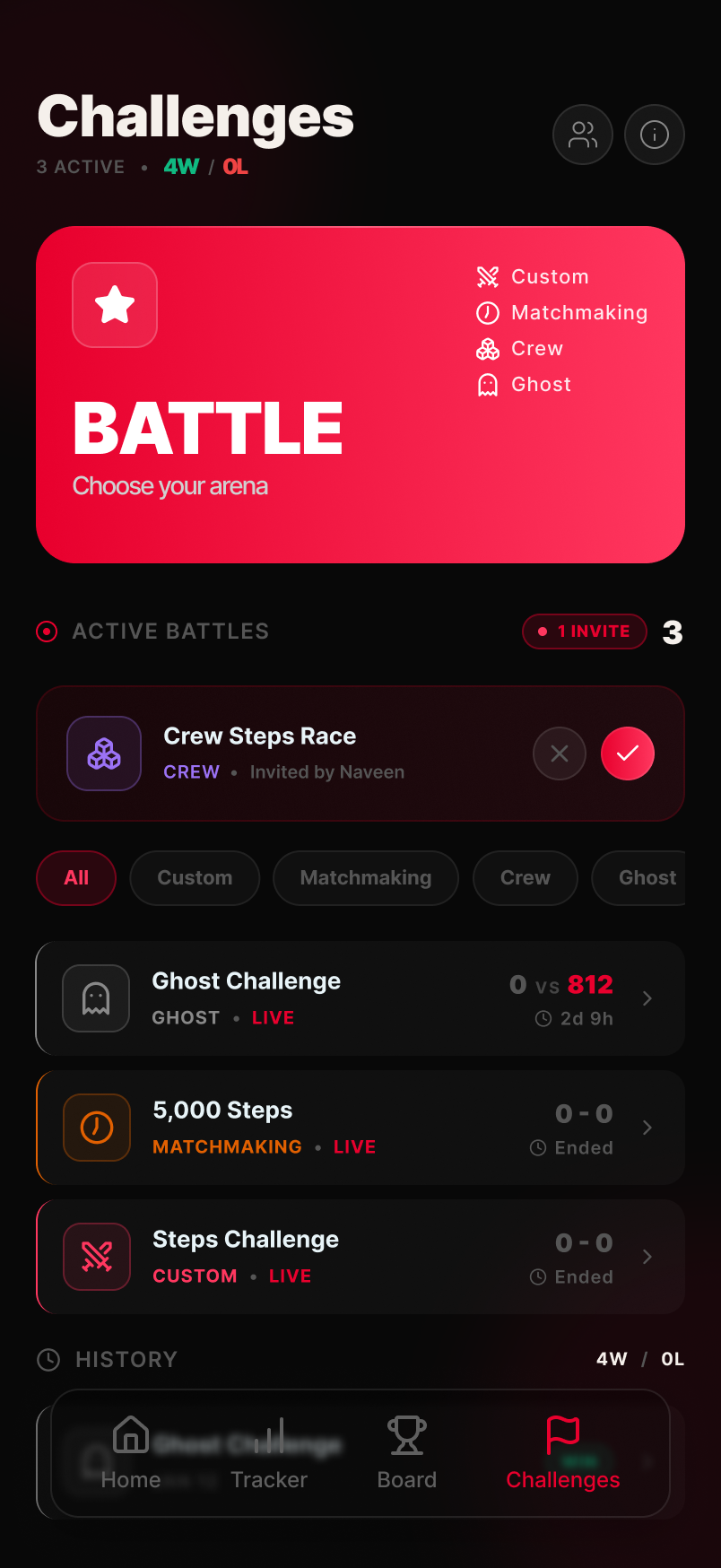
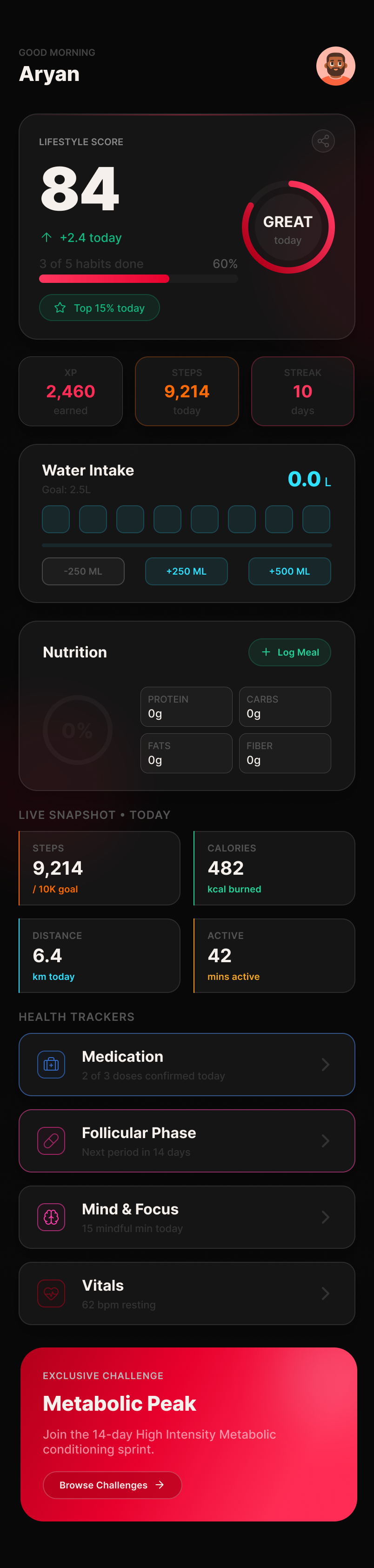
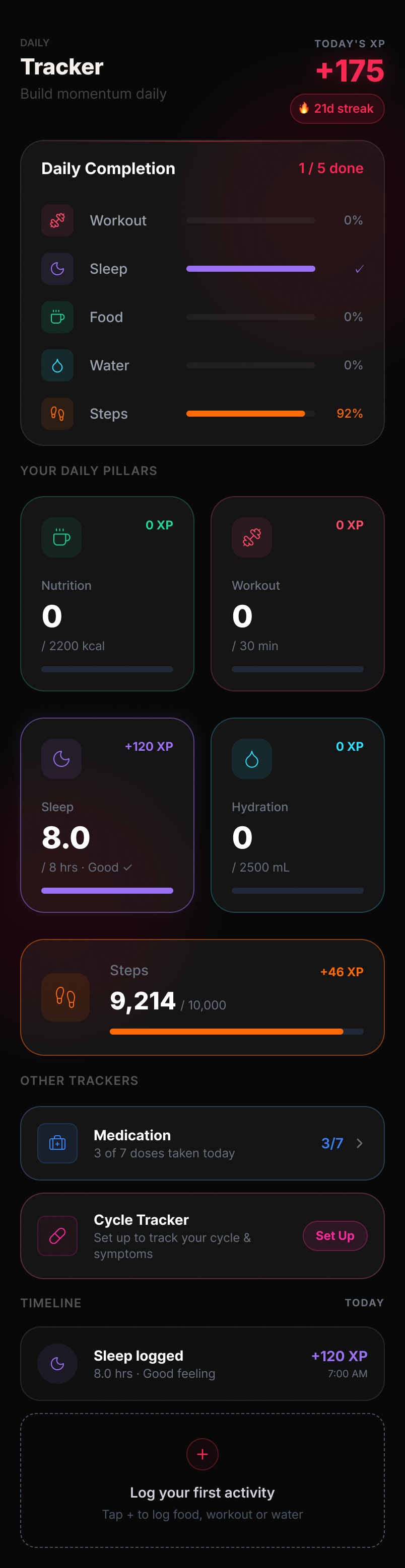
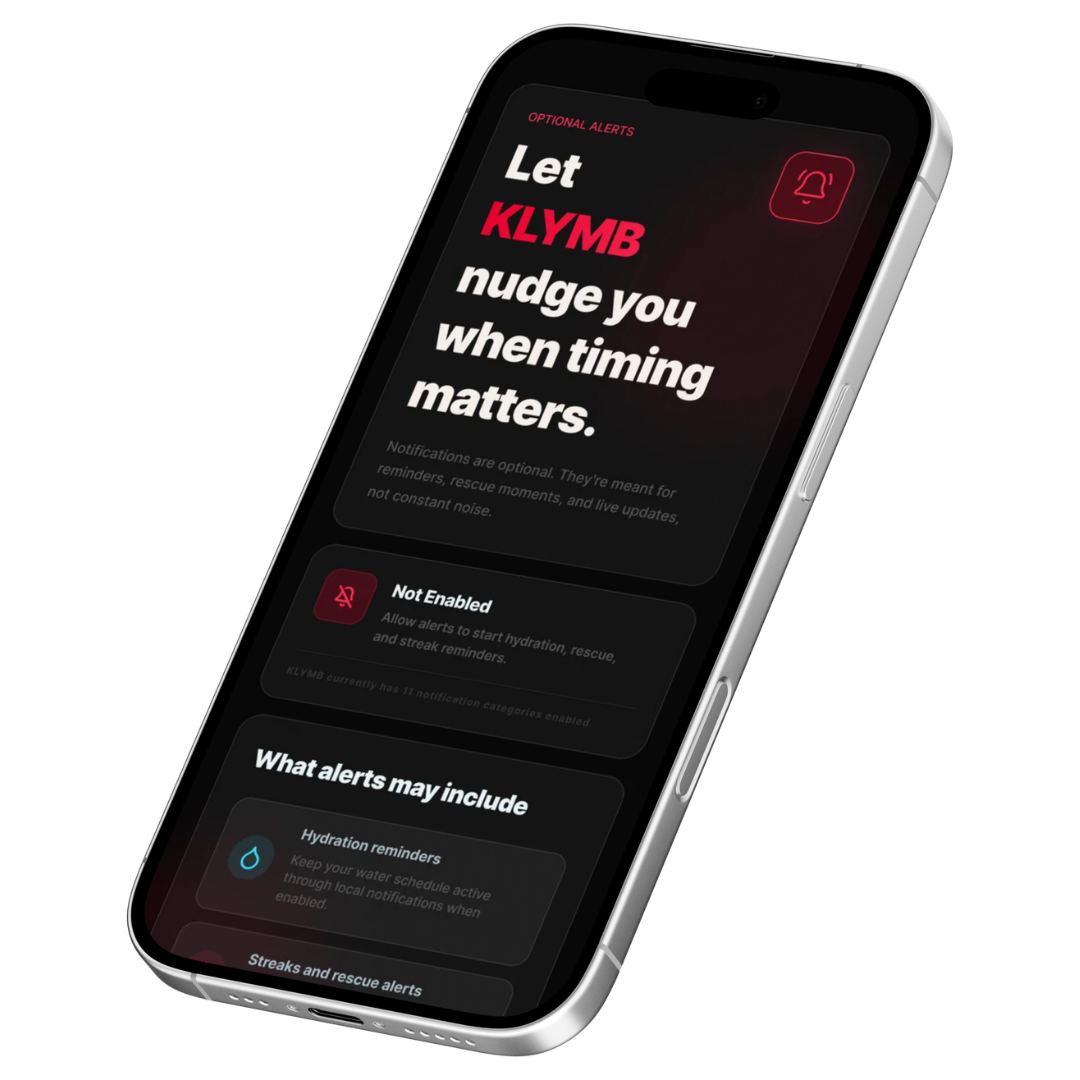
The color system was designed to feel premium, high-energy, and personal — dark backgrounds that make the interface recede, leaving only your data and progress front and center. The crimson gradient serves as the single energetic signal: CTAs, active states, streaks.
Each habit category has its own color — workout, sleep, nutrition, hydration, mind, leagues — so at a glance you can see your whole day in one ring chart without reading a single label.
Every screen was stress-tested for the hardest moment — not when you're motivated and energized, but when you barely picked up your phone. That meant reducing friction to near zero: one-tap logging, no onboarding friction after day one, progress that feels good even when it's incomplete.
The Share Cards feature came from a specific observation: people screenshot their progress and send it to friends anyway. Why not make that intentional? A designed artifact that's worth sharing — not just a data dump.
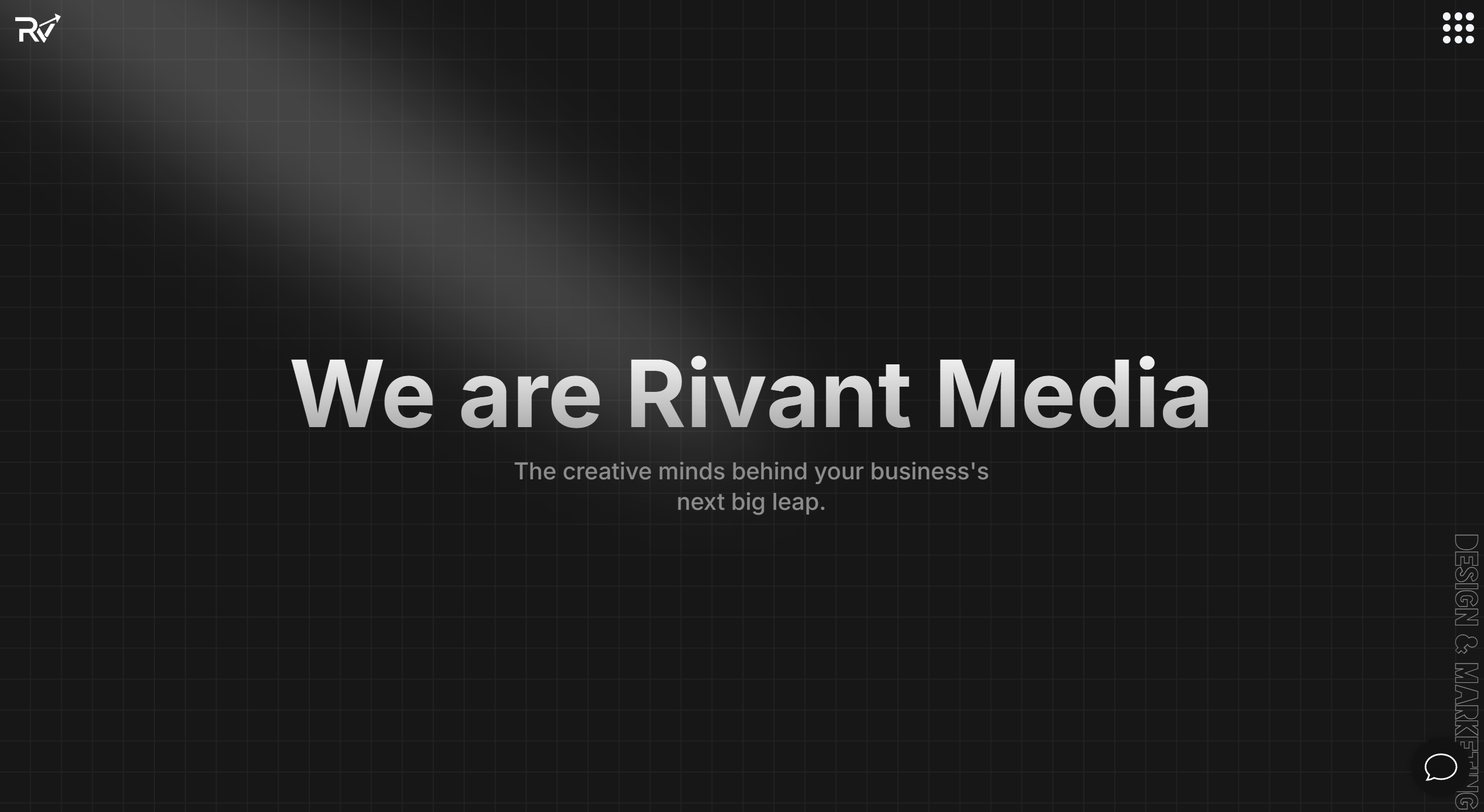
RIVANT Media is a Mumbai-based creative and design agency. When I joined as a UI/UX Intern in June 2024, they needed a new website — one that actually reflected the quality of work they were producing for clients. Designing for designers is the highest-pressure creative brief there is. Every decision gets scrutinized by people who do this for a living.
This was also my first real-world design project — three months into truly understanding what UI/UX meant. The stakes felt enormous.
RIVANT's existing online presence didn't match the calibre of their client work. They were producing high-quality creative for brands but their own website didn't reflect that identity. The challenge was to build a website that could stand next to their portfolio — and ideally, make people excited to reach out.
Simultaneously, the agency was going through a brand identity refresh. My work had to be consistent with that evolving brand direction, which meant working closely with the graphic design team throughout.
Midway through the project, a developer flagged that one of my hero animations would drop frames on mobile devices. My first instinct was to push back — the animation was intentional, it was the centrepiece of the landing page interaction. But I sat with it, understood the constraint, and redesigned the sequence to achieve the same visual impact at a fraction of the performance cost.
That was the moment performance became a genuine design constraint for me — not just a developer problem to be handed back. I didn't know it then, but it's the lesson I've applied to every project since.
The website is live at rivant.in — go see it. It has changed since I shipped it (agencies iterate on their own stuff too), but the bones of the layout and the core interaction philosophy are still mine.
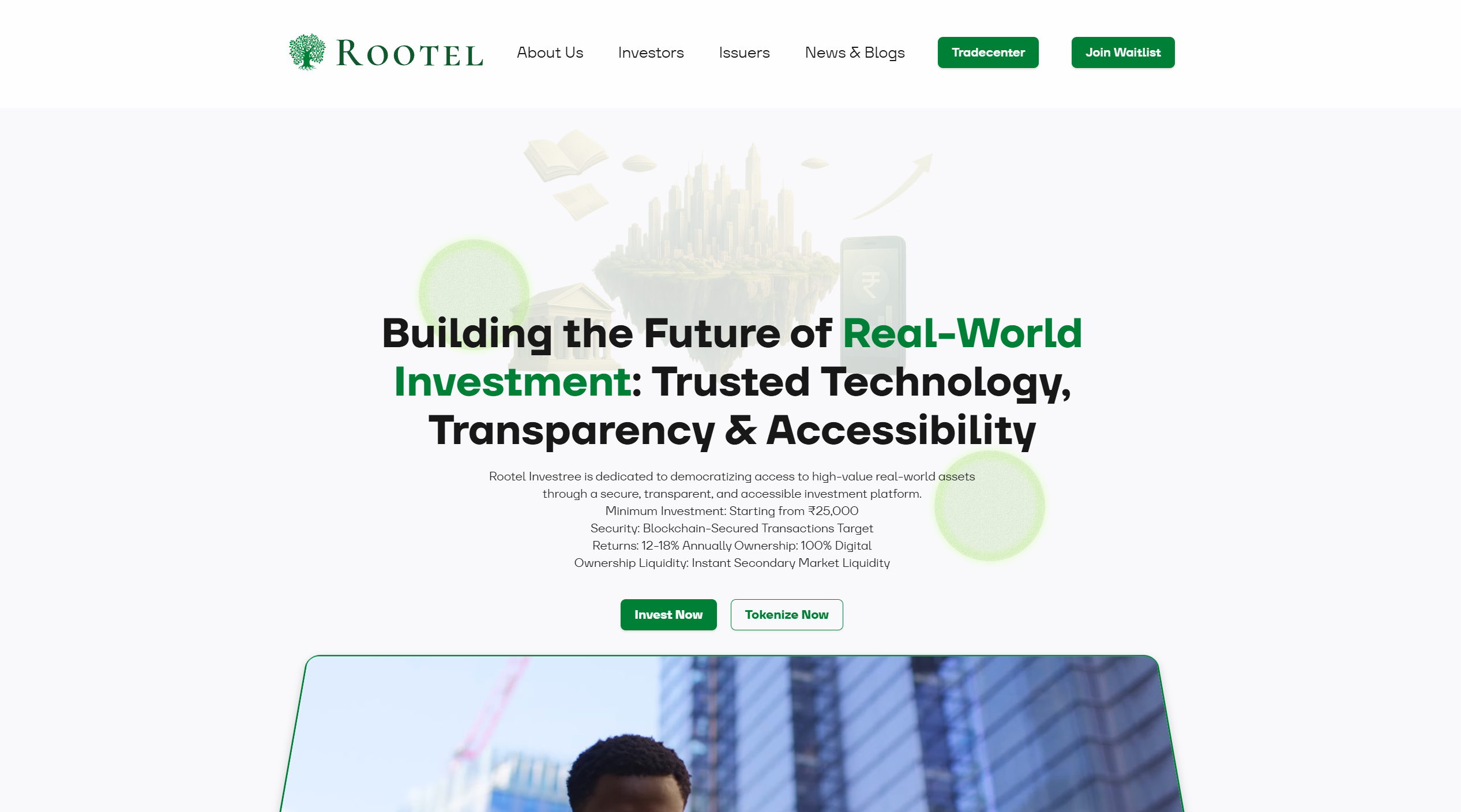
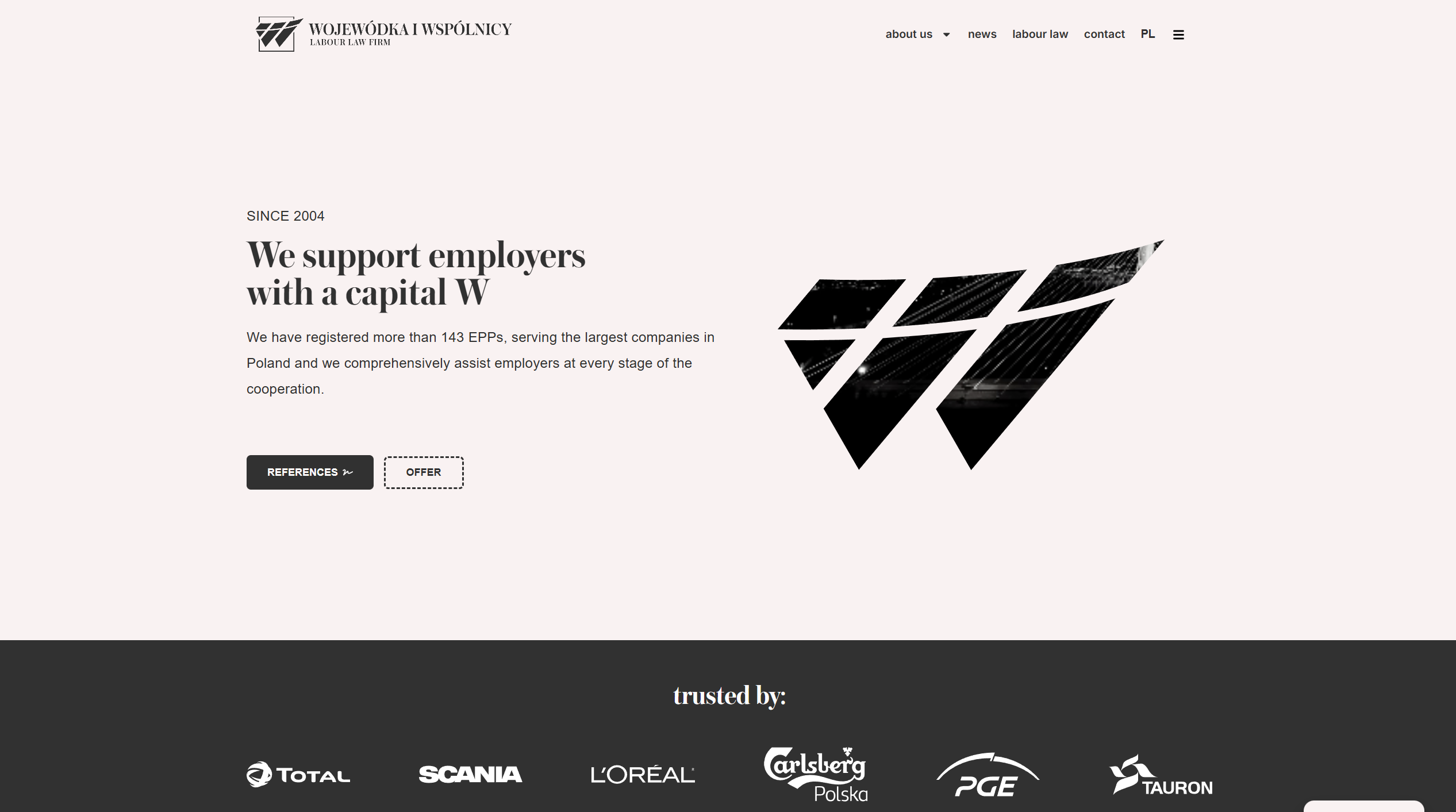
Wojewodka is a law firm based in Warsaw, Poland. When they reached out to me via Behance, their brief was simple and honest: the website is over 11 years old, built on an outdated WordPress template, and it no longer reflects what the firm actually is. They needed something that looked as professional as their work.
This was my first international freelance project — fully remote, cross-timezone, and entirely solo. No manager, no senior to ask, just me and a client on the other side of the world.
Law firm websites are trust artifacts. Before a potential client picks up the phone, they've already decided whether they trust you — based entirely on how your website looks. An outdated design doesn't just look bad, it signals to visitors that the firm doesn't pay attention to detail. For a law firm, that's a fatal signal.
The design needed to communicate three things immediately: authority, precision, and approachability. Formal enough to be credible, clean enough to be accessible.
This project taught me something no internship could — what it's actually like to be the only person accountable for a client's outcome. When the client had feedback at midnight Warsaw time, I needed to have a considered response the next morning. When scope started to creep, I had to hold the boundary. When I wasn't sure about a direction, I made the call and owned it.
Cross-cultural communication was also a real skill here. Working with a client in Poland, navigating legal terminology in a language that wasn't either of ours natively, and building trust entirely through async communication — that's not something you practice in a classroom.
The website is live at wojewodka.eu. Due to contract and privacy terms, I wasn't able to publish a detailed case study on Behance — but the work speaks for itself.
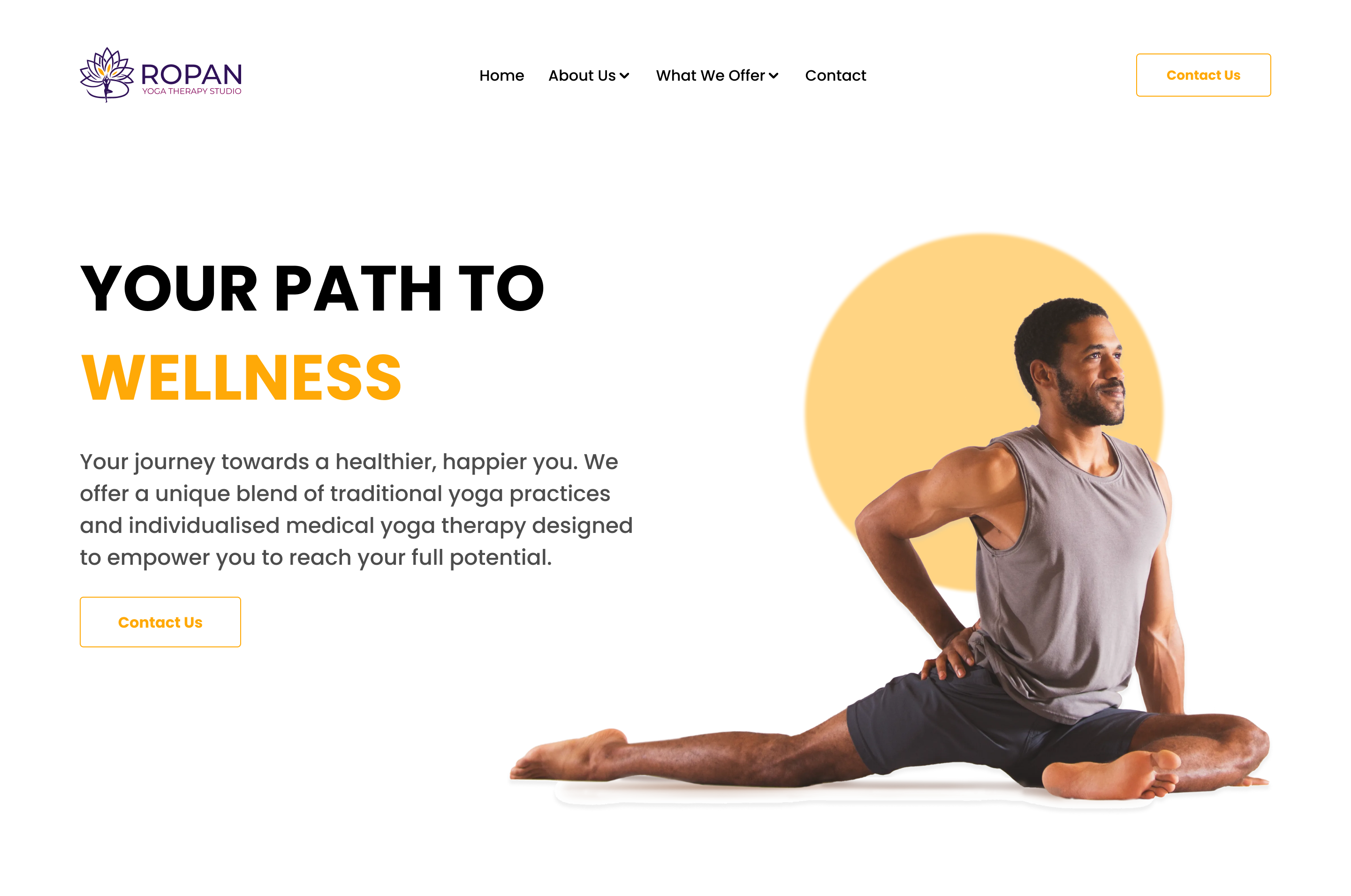
Ropan Yoga was my very first real-world design project — the one where everything I'd learned in theory had to actually work. It was a collaborative project during my internship at RIVANT Media, working alongside other designers who handled the brand identity while I took ownership of the responsive website design.
The project is published on Behance as a collaboration — not my brand identity, but my website designs. That's the honest version of how collaboration works, and it's the one I'm proud of.
Yoga brand design has a very specific visual language — calm, organic, grounded. The challenge was to take a brand identity that my collaborators were developing simultaneously and build website designs that felt like a natural extension of it, not a disconnected afterthought.
This meant having real design conversations — about how type choices translate from a logo to a full-page layout, how color ratios change between print assets and screen, how a brand's "feeling" needs to survive the translation to responsive breakpoints.
The biggest lesson here wasn't technical — it was collaborative. When you work alongside other designers, your work doesn't exist in isolation. Every decision I made on the website had to stay honest to what the brand team was building, and vice versa. That back-and-forth is a skill. It's also what makes the output better.
View the full project on Behance →

Designing a fitness and lifestyle app from ground zero — not as an intern or a contractor, but as a founding team member. I own the entire design surface: app UI, brand, iconography, share cards, avatars, and the product vision around it all.
What it means to design with zero net — no brief template, no senior feedback loop, no design review. Every decision sticks. I'm also learning how to contribute to product strategy, not just execute it.
After my internship, I built a Behance portfolio and waited. A client reached out within weeks — a law firm in Poland. Then a second project followed. Two complete websites, managed entirely solo — no manager, no brief template, no senior to escalate to.
Client management is a design skill. Discovery calls, scope definition, revision cycles, pushing back on feedback diplomatically — none of that is taught in design school. I learned it in real time, with real money on the line, across time zones.
Not every project ends perfectly. One client wasn't fully satisfied with my work — and sitting with that, understanding why, and extracting the honest feedback rather than dismissing it was one of the most valuable experiences I've had. It changed how I run discovery calls. It changed how I communicate early-stage directions. Failure, when it's honest, is a better teacher than success.

RIVANT Media is a creative and design agency in Mumbai. My first real-world design role — three months into truly understanding what UI/UX meant. I was thrown into production-ready work from day one: real clients, real deadlines, real feedback from people who design for a living.
Production-ready doesn't mean pixel-perfect in Figma. It means your design survives implementation — developer feedback, performance constraints, client changes, and last-minute scope shifts. I left knowing the difference between a design that looks good and a design that actually ships.
I don't start with screens.
I start with what's broken.
Most designers open Figma and start drawing boxes. I open a doc and write down what's actually broken — for real people, in real situations.
I also code. Not to compete with engineers, but to understand the machine I'm designing for. Knowing how APIs work changes how you design them. Knowing CSS changes how you spec layouts.
Two years in. Four real products shipped. One startup from scratch. Still learning. Always thinking in systems.
Four projects. Each one a different problem, a different context, a different version of me.
Fresh out of college. But the work was never fake.
If something here was worth your time — a coffee goes a long way. No pressure though.